

For nearby recipients, a local grocery delivery app or personal shopper gets fresh food to their door the same day. For long-distance recipients, a nationwide meal-shipping or prepared-meal gift service is more reliable because it's built for shipping. If the order includes anything perishable, schedule a delivery window or pick temperature-controlled shipping; otherwise, stick to shelf-stable or fully prepared meals.
TL;DR:
- Local grocery delivery works best for immediate, fresh items within the same city, but it depends on the store network's coverage.
- Nationwide meal-shipping services are more reliable for long-distance gifts, especially when scheduling specific delivery dates and including personal notes.
- Shipping perishable items requires temperature-controlled packaging, quick transit, and confirmation that the recipient can refrigerate upon arrival to prevent spoilage.
- Proper planning involves verifying delivery coverage, entering complete address details, choosing a specific delivery window, and communicating clearly with the recipient.
- Shelf-stable gifts or gift cards are safer options when you are unsure if someone will be home to receive fresh groceries or perishable packages.
Table of Contents
- What Are the Main Ways to Send Groceries to Someone?
- Ship It or Send a Local Shopper? How to Decide
- How to Order Groceries for Someone Without It Going Wrong
- What Should You Actually Send? Matching the Gift to the Method
- What Does It Cost to Send Groceries or a Meal Gift?
- Sending Groceries to Someone Out of State: A Step-by-Step Approach
- Payment Options and Security When Sending Groceries as a Gift
- What to Do If Groceries Arrive Damaged, Late, or Wrong
- Choosing Grocery Items That Actually Survive the Trip
- How to Package Groceries for Shipping So They Actually Arrive Fresh
- Halen's Take: Rethinking How You Send Groceries Locally
- Send Local Deliveries Through One App With Halen
- Sources
- FAQ
What Are the Main Ways to Send Groceries to Someone?
You've got four real paths here, and picking the wrong one is the top reason gift groceries end up melted on a porch or stuck at a shipping depot. Each option solves a different problem.
Local grocery delivery or a personal shopper works when your recipient lives in your city, or you're using an app tied to a store network in their area. You place the order, a shopper picks fresh produce, dairy, and pantry staples, and it lands at their door in a few hours. This is the only realistic choice when you want an actual grocery haul, not a curated gift box, delivered the same day.
Nationwide meal-shipping and prepared-meal gift services solve the distance problem. Companies like Send a Meal ship chef-prepared, ready-to-heat meals across the country, with scheduled delivery dates and a personal gift message attached. These vendors package for transit, which a standard grocery order never does.
Specialty food marketplaces fill a different niche. Goldbelly aggregates restaurants and regional producers who ship their signature items nationwide, so you can send someone a specific bakery's cheesecake or a barbecue joint's ribs instead of a generic gift basket.
Hybrid options round out the list:
- Shipping nonperishable groceries directly from a retailer's website (coffee, snacks, pantry goods)
- Frozen meal kits packed with dry ice or insulated liners for multi-day transit
- Gift cards or delivery-service credit when you're unsure what the recipient needs or when they'll be home
Choosing between these comes down to four questions: How far away is the recipient? How perishable is the order? Do you know their schedule? And is this a routine restock or a gift for an occasion? Answer those first, and the right service usually becomes obvious.
Ship It or Send a Local Shopper? How to Decide
The core trade-off is freshness versus reliability. A local shopper can grab ripe avocados and a rotisserie chicken and have them delivered within the hour. A shipped meal gift can't compete on that kind of immediacy, but it wins on consistency. Once you build the order and pick a delivery date, you're not depending on same-day store inventory or a shopper substituting your recipient's exact brand of yogurt.
Coverage is the next factor. Nationwide meal-gift companies typically guarantee delivery across the continental United States, while local grocery apps only work where the underlying store network operates. If your recipient lives somewhere without delivery coverage from major grocery chains, shipping is often your only real option.
Gifting features tip the scale further toward shipped services when the occasion matters:
- Scheduled delivery on a specific date (a birthday, an anniversary, a sympathy gesture)
- A personal note included with the package
- Pricing hidden from the packing slip, since meal-gift companies commonly strip cost information so the recipient just sees a gift, not a receipt
Liability is where people get burned. Unattended delivery shifts responsibility for theft or temperature-related spoilage onto whoever receives it, whether that's a local grocery drop-off or a shipped cooler box left on a porch in July. Some specialty vendors also exclude Alaska, Hawaii, and APO/FPO addresses entirely, so always check a vendor's shipping page before you assume nationwide means everywhere.
Pro Tip: If you're not sure whether your recipient will be home, don't gamble on a fresh grocery order. Switch to a shelf-stable gift box or a scheduled meal delivery instead. Reliability beats freshness when nobody can confirm someone will be there to receive it.
How to Order Groceries for Someone Without It Going Wrong
Most failed grocery gifts don't fail because of the food. They fail because of missing logistics. Here's the checklist that actually prevents that.
- Confirm coverage first. Before you build a cart, verify the service delivers to the recipient's exact address, not just their city or ZIP code range.
- Enter complete address details. Unit number, building entrance, floor, and any gate or buzzer code all matter. Missing operational details like these are one of the most common causes of delivery failures at apartments and offices.
- Choose a precise delivery window, not a vague day. If the order includes anything refrigerated, avoid unattended drop-off entirely unless the vendor uses transit-tested temperature-controlled packaging.
- Set substitution preferences deliberately. Allowing blanket substitutions is convenient but risky for recipients with allergies or specific dietary needs. Locking critical items or requiring the shopper to contact you before substituting is the safer call.
- Choose signature-required or photo-proof delivery for high-value orders or anything perishable, so you know it actually reached someone rather than sitting outside.
- Give the recipient a heads-up. Send them tracking information and an estimated arrival window, and mention any refrigeration needs so they're not caught off guard by a cooler box on their step.
Skipping the unit number or gate code is a small thing that causes a disproportionate share of failed or delayed deliveries.
Pro Tip: If the recipient's building has a front desk or concierge, name that person specifically in your delivery instructions. "Leave with Maria at the front desk" works far better than "leave at door" for apartment buildings.
What Should You Actually Send? Matching the Gift to the Method
The right grocery gift depends entirely on how it's traveling and how much control you have over timing.
Shelf-stable gifts are the safest bet when you're unsure about delivery timing or the recipient's schedule. Curated snack boxes, pantry bundles, and coffee or tea kits tolerate a day or two of transit delay without any food-safety concern, which makes them ideal for shipping.
Prepared meals from gift-focused vendors hit a sweet spot between convenience and occasion-appropriateness. Heat-and-serve dinners and family-size trays work well for new parents, someone recovering from surgery, or a family dealing with loss, and companies built around this model let you schedule the exact arrival date.
Frozen or perishable items only make sense when the vendor explicitly uses temperature-controlled shipping and you've confirmed the recipient can refrigerate the order the moment it arrives. Sending a frozen roast via standard ground shipping without insulated packaging is how gifts turn into a disposal problem.
Non-food alternatives solve the uncertainty problem entirely. A grocery-delivery gift card or a meal-subscription voucher lets the recipient choose their own timing, which is often the better move when you genuinely don't know their schedule or dietary preferences.
A quick mental filter: if you can't answer "will someone be home to receive this," lean shelf-stable or let them choose. If you know their schedule, prepared meals or fresh groceries both become fair game.
What Does It Cost to Send Groceries or a Meal Gift?
Expect four categories of charges: a delivery fee for getting the order from store to door, a service fee that covers the platform's operating costs, a shipping charge for nationwide meal or specialty-food orders, and a tip for the shopper or driver handling a local delivery.
Pricing shifts with timing. Expedited or same-day shipping costs more than standard multi-day transit, and fees commonly spike around holidays and weekends when demand for both local delivery and shipped gifts peaks. Ordering a few days ahead of a birthday or holiday, rather than the morning of, usually avoids the worst of that surge.
A few ways to keep costs down:
- Look for promo codes, especially for a recipient's first order with a new service
- Choose a standard, non-urgent delivery window instead of paying for expedited shipping
- Consider a subscription plan if you send groceries or gifts to the same person regularly
Pro Tip: Tipping matters more for local same-day shoppers than people realize. That tip often affects how carefully your shopper selects produce and handles substitutions, so a fair tip on a rush order can directly improve the quality of what arrives.
Sending Groceries to Someone Out of State: A Step-by-Step Approach
Long-distance orders carry more risk of spoilage and missed deliveries than local ones, so the sequence you follow matters.
- Decide the format early. Choose between a packaged meal gift (frozen or shelf-stable) shipped directly to their door, or arranging a local shopper delivery through a service that operates in their specific city.
- Check vendor shipping policies before ordering. Some specialty food sellers ship only within the continental U.S. and exclude Alaska, Hawaii, and APO/FPO addresses, so confirm coverage matches your recipient's exact location.
- Enter recipient details completely and schedule a firm delivery date. Include their phone number, and select signature-required or temperature-controlled handling if the vendor offers it.
- Follow up once it ships. Send the recipient tracking information along with a short note explaining any refrigeration or reheating instructions, especially if they weren't expecting a package.
This sequence matters more for out-of-state orders because you can't personally check in if something goes wrong. A missed delivery two states away isn't something you can fix by driving over.
Payment Options and Security When Sending Groceries as a Gift
Most grocery and meal-gift platforms accept major credit and debit cards, and many also support digital wallets like Apple Pay or Google Pay for faster checkout. Look for a payment page secured with HTTPS encryption, indicated by a padlock icon in your browser, before entering any card details.
Since you're paying for someone else's order, double-check that the platform lets you set the delivery address as different from your billing address without triggering a fraud flag. This is common with gift orders but occasionally causes payment holds if the two addresses look mismatched to a bank's fraud detection system.
Save your order confirmation and any tracking number in one place. If a dispute comes up later, that confirmation is your proof of purchase and delivery instructions. Avoid completing a grocery gift order over an unsecured public Wi-Fi network, and never send full card numbers directly to a shopper or driver through text or chat, even if they ask for verification purposes. A legitimate service handles all payment processing through its own app or website, not through a personal message.
What to Do If Groceries Arrive Damaged, Late, or Wrong
Contact the vendor's customer support immediately, ideally within a few hours of delivery, and take photos of the damaged or incorrect items before you touch or discard anything. Most grocery and meal-gift companies require photo evidence to process a refund or replacement, so this step protects your claim.
Late deliveries fall into a gray area depending on the service. Local grocery apps typically offer a partial refund or delivery credit for significant delays, while nationwide shippers often have a stated delivery guarantee tied to a specific carrier's transit window. Read the vendor's refund policy before you order if the delivery date is time-sensitive, like a birthday or holiday gift.
Wrong-item deliveries usually resolve fastest through the same channel you used to order, whether that's an in-app chat, a support email, or a phone line. Keep the recipient in the loop during this process. Since they're the one holding a damaged or incorrect package, ask them to hold onto everything, including packaging, until the vendor confirms whether a return or replacement is needed. Most companies won't require you to ship anything back for a straightforward damage or wrong-item claim.
Choosing Grocery Items That Actually Survive the Trip
Not every grocery item makes sense for delivery or gifting, and picking the wrong ones is how good intentions turn into wasted food. Sturdy produce like apples, oranges, and root vegetables travel far better than soft berries, ripe avocados, or leafy greens, which bruise or wilt during even a short delay.
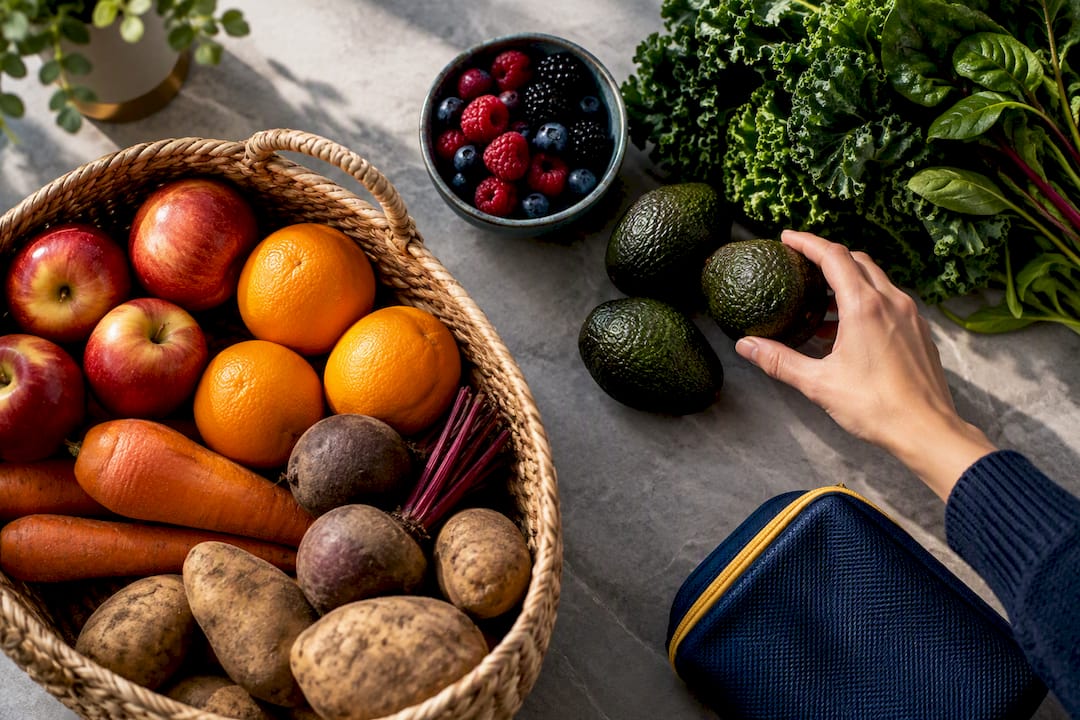
For shipped gifts specifically, favor items with a longer natural shelf life: aged cheeses over fresh mozzarella, cured meats over raw cuts, and roasted nuts or dried fruit over anything with high moisture content. These hold their quality across a multi-day shipping window without needing refrigeration the entire time.
Recipient preferences matter just as much as durability. A grocery gift ignoring dietary restrictions, whether that's a nut allergy, a gluten intolerance, or a personal preference for organic produce, creates waste no matter how well-packaged it arrives. If you're not certain what someone can eat, a curated snack box with variety, or a gift card letting them choose their own items, avoids the guesswork entirely. Occasion matters too: a comfort-food meal tray suits someone recovering from an illness, while a coffee and pastry bundle fits a celebratory delivery better than raw ingredients someone has to cook themselves.
How to Package Groceries for Shipping So They Actually Arrive Fresh
Insulated packaging is non-negotiable for anything perishable. Foam coolers or insulated liners paired with gel packs or dry ice keep refrigerated and frozen items at a safe temperature for the typical one to two days most ground shipping takes.
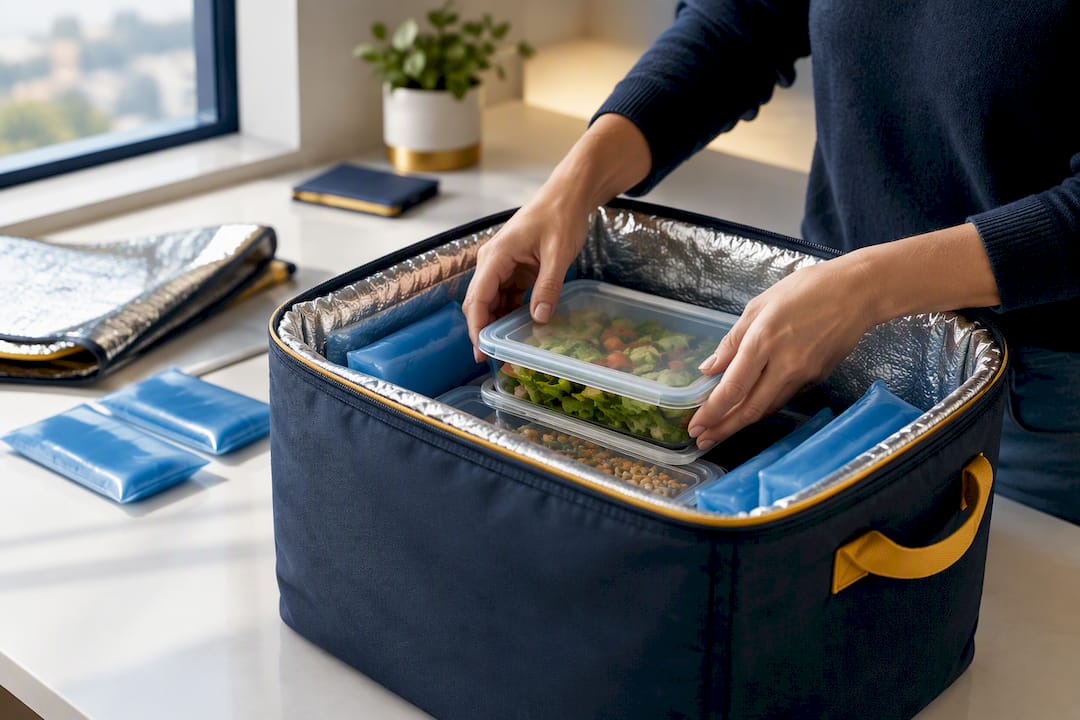
Shelf-stable items need less engineering but still benefit from padding. Snack boxes, coffee bags, and pantry goods should be wrapped individually or separated with tissue or packing paper so glass jars or delicate packaging don't crack in transit.
For anything frozen, pack it solid, with minimal air space in the cooler, since a fuller container holds cold temperatures longer than a half-empty one. Mail-order food safety guidance recommends choosing overnight or two-day shipping for perishable items specifically because extended transit time is the leading cause of spoilage, regardless of how well something is packed. If a vendor doesn't offer expedited shipping for a perishable item, that's a signal to switch to a shelf-stable option instead.
Always label the outside of perishable shipments clearly, and include a note with reheating or storage instructions inside the box so the recipient knows exactly what to do the moment it arrives.
Halen's Take: Rethinking How You Send Groceries Locally
Most of the friction in sending groceries to someone doesn't come from the food. It comes from coordinating between apps, drivers, and delivery windows that don't talk to each other. Halen is built around the idea that rides, package delivery, grocery orders, and food delivery should live in one account instead of four separate ones.
Halen's driver model pays drivers 100% of their fares through a flat weekly platform fee rather than taking a cut of every delivery, and pricing for customers stays upfront with no surge charges added at checkout. That transparency matters most when you're sending a gift, since you want to know the total cost before you commit, not after a last-minute price jump.
For someone in the same city as your recipient, Halen is worth checking as delivery and grocery services roll out, especially if you already use it for rides or package delivery and want one app instead of several. For long-distance recipients, a nationwide meal-shipping service still makes more sense, since Halen's coverage is built around local, same-city delivery rather than cross-country shipping.
— Halen
Send Local Deliveries Through One App With Halen
Juggling a grocery app, a rideshare app, and a separate delivery service just to coordinate one gift for someone across town gets old fast. Halen brings rides, package delivery, and grocery ordering into a single account with transparent, upfront pricing and no surge charges sprung on you at checkout.

Getting started is simple: open the app, select the grocery or delivery option for your recipient's city, enter their address with any building or gate details, and confirm your order before checkout shows you the final price. This platform currently focuses on local, same-city delivery as it expands market by market, so it can be a practical choice when your recipient lives nearby and you want one platform instead of several. For long-distance gifting, pairing Halen with a nationwide meal-shipping service still covers both ends of the map. Check current availability and start your first delivery through the app today.
Sources
For anything involving perishable food and shipping, FoodSafety.gov's mail-order guidance covers safe handling and packaging standards directly from a federal source. Their meal-kit and delivery safety tips address the unattended-delivery risks specifically.
For vendor-specific policies, check Send a Meal for nationwide prepared-meal gifting details and Goldbelly for regional specialty food shipping. Instead of Flowers offers another option focused on sympathy and occasion-based food gifts delivered nationwide.
FAQ
What Is the Least Expensive Way to Get Groceries Delivered?
Choosing a standard, non-urgent delivery window instead of expedited or same-day shipping is usually the cheapest route, since rush fees and shipping surcharges add up fast. Using promo codes on a recipient's first order and skipping holiday-weekend delivery dates, when demand-based fees spike, also keeps costs down.
Which Grocery Delivery Option Is Best for Sending Food to Someone Far Away?
For long-distance recipients, a nationwide meal-shipping or prepared-meal gift service like Send a Meal is generally more reliable than trying to coordinate a local shopper remotely. These services build their entire model around scheduled delivery dates and shipping-safe packaging, which a standard grocery order isn't designed for.
What Is the 5-4-3-2-1 Rule for Groceries?
Definitions of this rule vary depending on the source, and there's no single standardized version tied to grocery delivery or gifting specifically. If you've seen it referenced as a nutrition or meal-planning guideline, it's worth confirming the exact context before applying it to a grocery gift order.
Can You Gift Someone a Grocery Delivery?
Yes, most local grocery delivery apps let you place and pay for an order with someone else's address as the delivery destination, and many support gift notes or scheduled delivery times. For a more occasion-focused gift, nationwide meal-gift services typically go further, hiding pricing on the packing slip and letting you attach a personal message.
Does Halen Deliver Groceries Nationwide?
Halen focuses on local, same-city delivery as it rolls out market by market, rather than nationwide shipping. For nearby recipients, Halen works well for grocery and package delivery; for long-distance gifting, a nationwide meal-shipping service remains the better fit.